
The Future of Healthy Life Extension! 🧬⏰ CRISPR
12/12/20252 min read
The Future of Healthy Life Extension! 🧬⏰ CRISPR
We are on the brink of an unprecedented revolution in how we understand and manage aging. Science and technology are converging to offer us tools that promise not only to prolong our lifespan but also to drastically improve our healthspan as we age.
Here are 5 of the most disruptive technologies shaping healthy life extension:
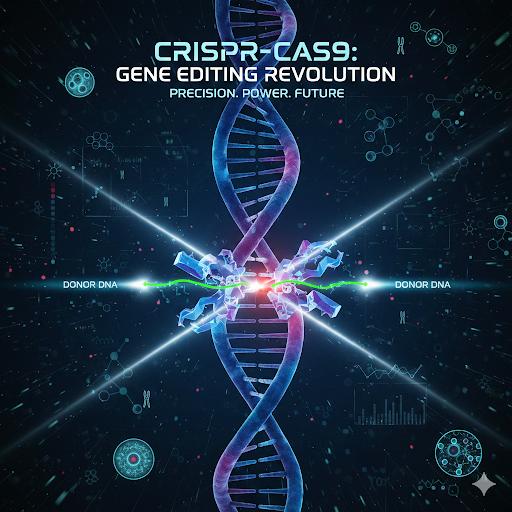
1. Gene Editing (CRISPR-Cas9): This revolutionary technology acts like molecular scissors, allowing scientists to precisely cut and paste specific sections of DNA. CRISPR-Cas9 is being harnessed to correct genetic errors associated with chronic diseases and aging, offering a powerful capability to rewrite our biological code and potentially eliminate age-related damage at its source.
2. Senolytics and Cell Therapies: Drugs that eliminate senescent cells ("zombie cells") that accumulate with age and contribute to tissue damage, alongside therapies that use stem cells to repair and regenerate damaged tissues.
3. Artificial Intelligence and Big Data in Health: AI is revolutionizing drug discovery, personalized medicine, and disease prediction, identifying patterns and treatments much faster than traditional methods.
4. Cellular Reprogramming (Epigenetic Rejuvenation): Techniques that seek to "reset" the cellular biological clock, essentially reversing a cell's functional age and restoring its youthful vitality.
5. 3D Organs and Tissue Engineering: The creation of functional organs and tissues in the laboratory could one day replace damaged or aged organs, eliminating the need for complex transplants and their challenges.
CRISPR-Cas9 is the most precise and revolutionary technology currently available for Gene Editing. Discovered in bacterial immune systems, this tool has been adapted by scientists to function as highly accurate molecular scissors for DNA.
How does it work?
The CRISPR system has two main components:
1. The Guide RNA (gRNA): This acts like a GPS system, programmed to recognize and latch onto a precise, target location within the DNA strand that needs to be modified.
2. The Cas9 Enzyme: This acts as the scissors, an enzyme that makes a clean, double-strand cut at the exact location marked by the gRNA.
What is the result?
Once the DNA is cut, the cell's natural repair mechanisms jump into action. Scientists can leverage this repair process to:
• Remove a faulty or disease-causing segment of DNA.
• Insert a new, healthy piece of DNA (known as the "donor DNA").
This capability allows researchers to correct genetic errors with unprecedented speed and accuracy, opening vast possibilities in medicine, agriculture, and especially in the field of healthy life extension, where it can potentially address the molecular roots of aging and chronic disease.