
Senescence Engineering: The Next Frontier in Longevity Medicine 🧬🔬
2/6/20262 min read
For years, the scientific community has focused on identifying the "Hallmarks of Aging" – the molecular culprits behind cellular decline. While understanding why we age is crucial, the paradigm is rapidly shifting towards how we can intervene.
As highlighted by leading voices like BAT Institute | Bioengineering & Advanced Therapies Institute , we are moving from observation to engineering. This isn't just about slowing down aging; it's about actively repairing, reprogramming, and optimizing our biological systems.
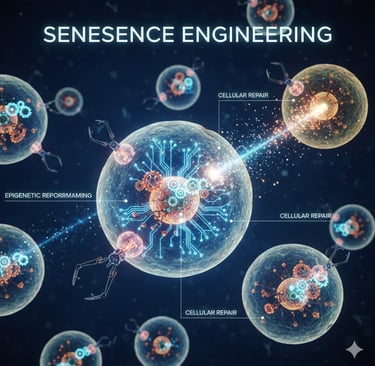
Senescent cells, often called "zombie cells," stop dividing but refuse to die, instead spewing inflammatory signals that damage surrounding tissues. They are a root cause of age-related diseases, and targeting them is where Senescence Engineering truly shines.
Here's a look at the cutting-edge (and even some "classic" redefined) technologies driving this revolution:
🧬1. Next-Gen Senolytics & Targeted Delivery: Beyond first-generation compounds, we're now developing highly specific senolytics that selectively eliminate senescent cells with minimal off-target effects. Think antibody-drug conjugates (ADCs) and smart nanoparticles that act as precision guided missiles.
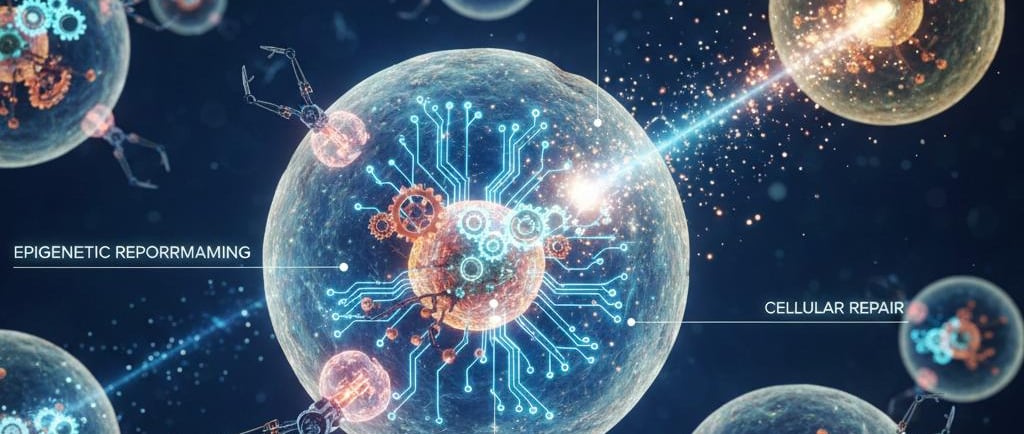
🧬2. Partial Epigenetic Reprogramming: This is where we don't just clear out old cells, but actively "reset" their biological clock. Techniques using modified Yamanaka factors aim to rejuvenate cells in situ, bringing them closer to a youthful state without losing their identity. David Sinclair's team at Harvard is pioneering human trials in this very area for specific tissues, with promising results on the horizon.
🧬3. Senomorphics & SASP Modulation: Sometimes, we don't need to kill the cell; we just need it to "behave." Senomorphics are compounds that silence the harmful SASP (Senescence-Associated Secretory Phenotype), blocking the inflammatory signals these cells emit, thereby preventing collateral damage to healthy tissues.
🧬4. AI-Driven Drug Discovery (AIDD): Artificial Intelligence is supercharging the pace of discovery. AI platforms can screen millions of molecules to identify novel senolytics or senomorphics with unprecedented speed and accuracy, accelerating potential breakthroughs.
🧬5. Metabolic Modulators (The "Classics" Reimagined): Even traditional compounds like Metformin and Rapamycin are being re-evaluated through an engineering lens. These act as "master switches" for cellular pathways, promoting autophagy and nutrient sensing, effectively slowing down senescence and its impact. The TAME trial for Metformin is a testament to the clinical relevance of these approaches.
What's next? 🧬🔬The convergence of these technologies points towards personalized, multi-modal interventions. Imagine a future where AI analyzes your epigenetic clock, identifies your specific senescent burden, and prescribes a precise combination of senolytics, senomorphics, and epigenetic modulators.