
🧬 Induced Pluripotent Stem Cells (iPS): A Key Technology for Regenerative Medicine and Healthy Life Extension
12/15/20251 min read
🧬 Induced Pluripotent Stem Cells (iPS): A Key Technology for Regenerative Medicine and Healthy Life Extension
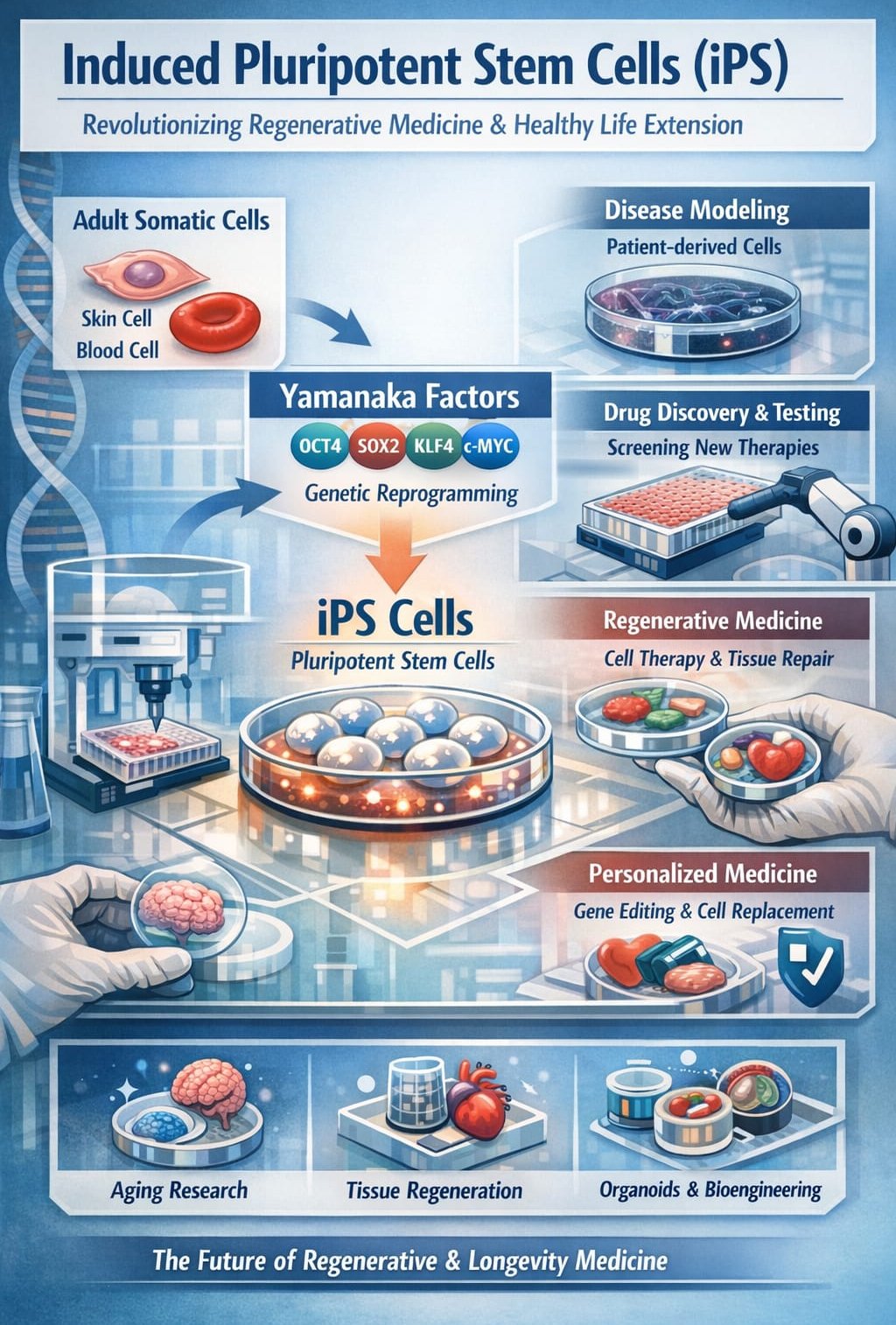
Induced pluripotent stem cells (iPS cells) are adult somatic cells—such as skin or blood cells—that have been genetically reprogrammed back into a pluripotent state, similar to embryonic stem cells. This breakthrough technology allows cells to regain the ability to self-renew indefinitely and differentiate into virtually any cell type in the human body.
The reprogramming process is achieved by introducing specific transcription factors—known as the Yamanaka factors (OCT4, SOX2, KLF4, and c-MYC)—which reset the cell’s epigenetic identity and activate embryonic-like gene networks.
🔬 Why are iPS cells so important?
iPS technology has transformed biomedicine by enabling:
Disease modeling using patient-specific cells, allowing researchers to study human diseases with unprecedented accuracy.
Drug discovery and toxicity testing in human-relevant cellular systems, reducing reliance on animal models.
Regenerative medicine and cell therapies, offering the potential to generate autologous cells for tissue repair with reduced risk of immune rejection.
Personalized medicine, including gene correction strategies combined with cell replacement therapies.
🧠 iPS cells and healthy longevity
In the context of healthy life extension, iPS cells are a foundational tool for:
Understanding the cellular mechanisms of aging
Developing rejuvenation and tissue regeneration strategies
Enabling bioengineered tissues and organoids for advanced therapies
Despite remaining challenges—such as ensuring genomic stability, controlled differentiation, and clinical-scale manufacturing—iPS cells are widely regarded as one of the cornerstones of future regenerative and longevity-focused medicine.
🧬Follow us for more cutting edge technologies
www.batinstitute.eu